Probate Real Estate: How to Find and Buy Inherited Houses
How probate real estate works, who can legally sell an estate house, where to find probate cases in public records, and how to reach the executor.
The Skipset team · · 12 min read
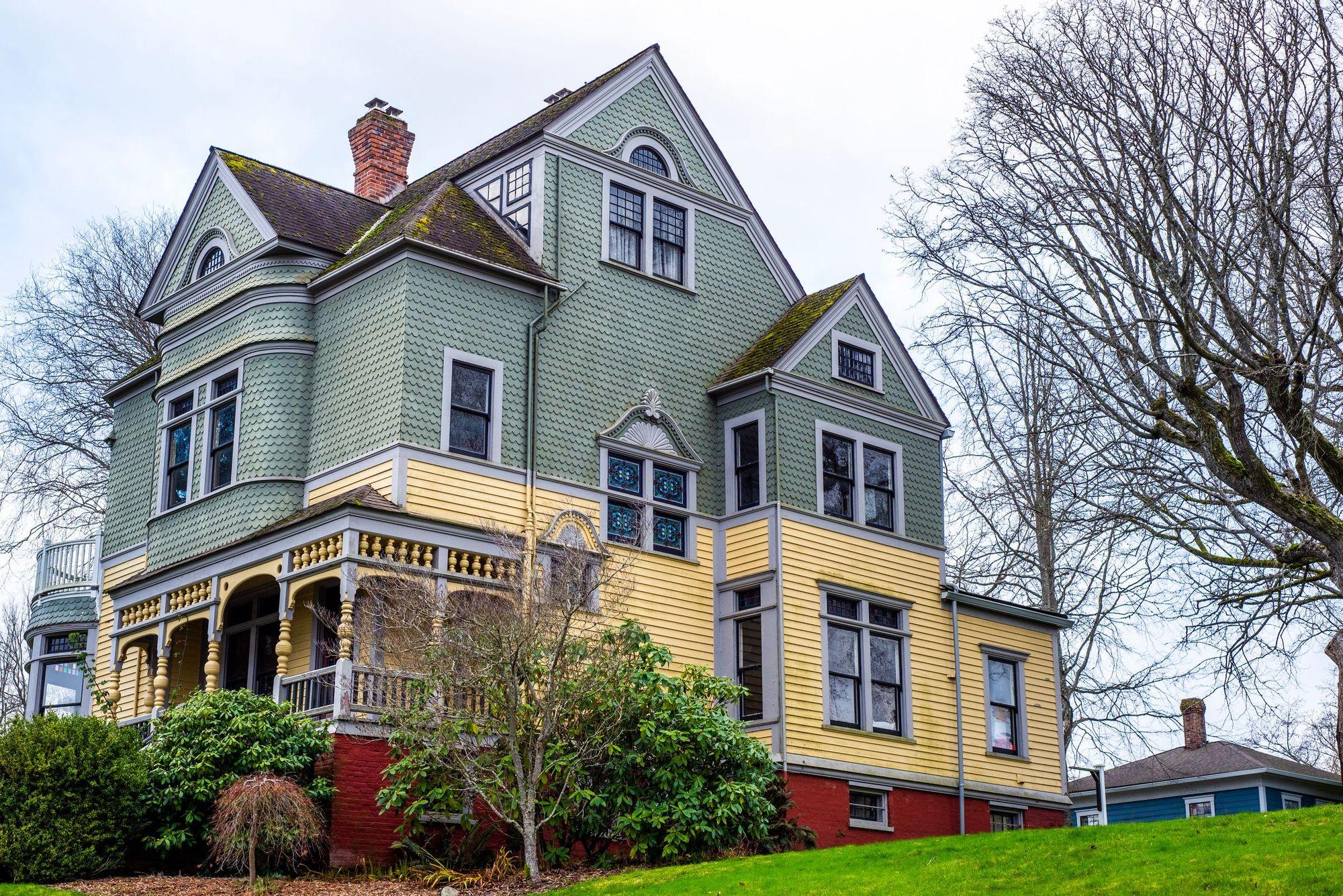
Probate real estate is property owned by someone who has died, where a court case is open to settle their estate and transfer what they owned. In most cases, nobody can sign a deed for the estate until the court appoints someone to act for it. Once it does, that person has to pay the bills, deal with the property and distribute what is left. The house is often the biggest and most expensive asset to handle.
That is why probate properties matter to investors and agents. The person in charge often lives out of state, the house may be empty, and the bills keep running. This guide covers who can legally sell, how the timeline runs, where the records are, how to reach the family with respect, and the deal structures and mistakes that come up most.
Rules vary by state; confirm with a local real estate attorney before you sign anything.
How probate works when the estate owns a house
When someone dies owning real estate in their own name, the heirs usually cannot sell it or deliver clean title until a court process sorts out who gets it and who has the power to act. The basic steps look similar in most states:
- A petition is filed with the court that handles estates in the county where the person lived. If there is a will, the petition asks the court to admit it to probate. If not, it asks the court to appoint an administrator.
- The court appoints a personal representative. If the will names someone, that person is the executor. If there is no will, or the named person cannot serve, the court appoints an administrator, usually a close family member.
- The court issues letters. Letters testamentary go to an executor. Letters of administration go to an administrator. New York's court system, for example, describes letters of administration as the document that gives the heir authority to gather and distribute the decedent's property. The letters are the proof you will need to see before any contract means anything.
- Creditors get notice and a deadline to file claims.
- The representative inventories the assets, pays valid debts and expenses, and either sells property or distributes it to the heirs.
- The estate closes.
"Personal representative" is the general term for whoever holds the letters, executor or administrator. The Uniform Probate Code, the model law many states have adopted in whole or in part, uses it throughout.
When a house skips probate
Not every inherited house goes through court. Common ways real estate passes outside probate:
- Joint ownership with survivorship. The surviving co-owner takes title by operation of law.
- A living trust. The successor trustee sells or distributes without a probate case.
- A transfer-on-death deed. Where state law allows it, the owner records a deed naming a beneficiary who takes the property at death. The Uniform Law Commission's Real Property Transfer on Death Act describes it as a way to pass real estate "without a probate procedure."
- Small estate procedures. Many states have shortcuts for low-value estates, though they are often limited to personal property or have their own rules for real estate.
These heirs still own a house they may not want. Our guide to inherited property covers how to find and work with them.
Who has the authority to sell a probate property
Most guides skip this part, and it kills deals. A son who says "Mom's house is mine, I'll sell it to you" may be right about the will and still have no legal power to sign.
The representative's power comes from three places: state law, the will, and the court's order. Under the Uniform Probate Code, a personal representative has the "same power over the title to property of the estate that an absolute owner would have," and can exercise it "without notice, hearing, or order of court" (Section 3-711). Section 3-715 lists selling real property among the transactions the representative may handle, unless the will or a court order restricts it.
Independent vs supervised administration
States split probate into lighter and heavier versions, and the names vary. The lighter version is often called independent, informal or unsupervised administration. The representative acts on their own and the court stays in the background. The heavier version is supervised or dependent administration, where the court reviews more decisions.
The practical point: in some states supervision changes who must approve a sale, and in others it does not. Under the Uniform Probate Code, a supervised representative still has the power to sell without interim orders; what they cannot do without a court order is distribute the estate. Any other restriction the court imposes must be endorsed on the letters to bind people dealing with the representative in good faith (Section 3-504). So ask for a copy of the letters and read them.
How three large states handle probate sales
| State | When the representative can sell without a court order | When a court must approve |
|---|---|---|
| California | With full authority under the Independent Administration of Estates Act, after a Notice of Proposed Action | With limited or no independent authority, a court must supervise the sale (Prob. Code § 10501) |
| Florida | When the will gives a power of sale (Fla. Stat. § 733.613) | When there is no will, or the will gives no usable power of sale: "No title shall pass until the court authorizes or confirms the sale" |
| Texas | An independent administrator generally has the sale powers of a dependent one "without the necessity of court approval" (Bell County court guide) | In a dependent administration, estate property generally may not be sold without a court order (Est. Code § 356.001) |
California deserves a closer look because its court-confirmed sales work differently from a normal closing.
- With full authority, the representative delivers a Notice of Proposed Action to affected heirs at least 15 days before the date on or after which the sale can happen (§ 10586). If someone objects, the sale can end up in front of the court.
- In a court-confirmed sale, the representative files a Report of Sale and Petition for Order Confirming Sale, and the price must be at least 90 percent of an appraisal made within a year of the hearing (§ 10309).
- Other buyers can overbid at the hearing. The first overbid must be at least 10 percent more on the first $10,000 of the original price plus 5 percent more on the rest (§ 10311). On a $200,000 accepted offer, the minimum overbid is $210,500.
That last rule changes how you buy. Your accepted contract is an opening bid until the judge signs the order.
A realistic probate timeline
No statute guarantees how long probate takes. What the statutes give you are floors that no estate can skip, plus a few check-in deadlines.
| Milestone | Example rule |
|---|---|
| Representative appointed, letters issued | No sooner than 120 hours after death for an informal appointment under UPC § 3-307; in practice it depends on the court's calendar and whether anyone contests the will |
| Creditor claim window | Four months after first publication under UPC § 3-801; three months in Florida (§ 733.702); four months after letters in California (§ 9100) |
| Earliest informal closing | No earlier than six months after the representative's appointment under UPC § 3-1003 |
| Status check-in | In California, a petition for final distribution or a status report within one year of letters, or 18 months if a federal estate tax return is required (§ 12200) |
| Court-confirmed sale | Adds a petition, notice and a hearing date set by the court |
| Will contests or heir disputes | Can add months or years |
Two things follow. The house often sits empty during the creditor window while carrying costs pile up. And a sale can happen well before the estate closes: you need someone with letters and, where required, a court order, not a closed case.
Where probate properties show up in public records
Probate data is public, but it is scattered across offices. Here is where to look and what each source tells you.
The court that handles estates
Every county has one, and the name changes by state. It may be probate court, a probate division of the circuit or superior court, surrogate's court in New York, or the register of wills acting as clerk of the orphans' court in Pennsylvania. Many counties now have online case search. Delaware County, Pennsylvania, for instance, lets the public search probated estates as a guest.
From a new estate filing you can usually pull:
- The decedent's name and date of death
- The case number and filing date
- The personal representative's name and mailing address
- The attorney of record
- Whether there is a will, and the type of administration
Some courts also make the inventory and appraisal public. If yours does, it will list the real estate in the estate, often with a value.
Notices to creditors
Many states have the representative publish a notice to creditors in a local newspaper. The Uniform Probate Code leaves states the choice of making it mandatory or optional, but where it runs, it typically names the decedent, the representative, their address or their attorney's, and the claims deadline. Check the legal notices section of the paper of record for your county and any statewide public notice site.
Recorder and assessor records
A court case tells you someone died. The recorder and assessor tell you whether they owned anything. Search the decedent's name in the county's property records to find parcels, then confirm:
- The decedent held title alone, or with someone who has also died
- No recorded transfer-on-death deed or deed into a trust
- Open mortgages, liens and any recorded judgments
- Whether the tax bill is current
A probate parcel that is also behind on taxes is worth extra attention, since the family is now on a clock. See our guide to tax delinquent properties for how those records work.
Obituaries
Obituaries can show a death before any court filing, but they tell you nothing about authority. Contacting a family days after the funeral earns you a bad name fast.
How to reach the executor or heirs respectfully
The person you are calling may have buried a parent last month. Treat the first conversation as a service call, not a pitch.
Who to contact. Start with the personal representative. Reaching out to the attorney listed on the case is fine, especially on larger estates. Attorneys often want a clean cash offer they can show the family.
When. Waiting until letters are issued is a sensible default. Before that, no one can sign, and the family is usually still handling the funeral and paperwork.
How. Mail to the address on the filing is the gentlest first touch. Calls and texts are faster but come with rules: read the FTC's Do Not Call guidance and ask your counsel how federal and state calling and texting rules apply to you. Honor every "please stop" the first time.
What to say. A hypothetical opener: "Hi, this is Sam. I buy houses in this county and saw the estate filing for your mother's property on Oak Street. I'm sorry for your loss. If the family has decided to sell, or is still deciding, I'm happy to make an offer and handle the house as-is. Is this a bad time?"
What to ask on the first call
Learn whether there is a deal and whether this person can deliver it.
- Authority: Have letters been issued, and to whom? Is the administration independent or supervised? Does the will give a power of sale? Are other heirs involved, and do they agree on selling?
- Price: Do they have a number in mind? Has a probate referee or appraiser valued the house? Is there a mortgage, and roughly what is owed?
- Condition: When was it last lived in? Is it occupied now, and by whom? What needs work? Is personal property still inside?
- Timeline: When do they want it handled? Are taxes, insurance or a mortgage payment coming due? Does the court need to approve the sale?
- Motivation: Do the heirs want cash, or does one want to keep it? Is anyone living out of state? Are there debts the estate has to pay?
Common probate deal structures
Cash purchase, as-is. A common structure. You buy from the representative, the estate leaves behind whatever it does not want, and you close once authority and any required court order are in place. Many estates value certainty over the last dollar.
Contract contingent on court approval. Where a court order is needed, your contract says so. Expect the closing date to follow the court's hearing date, not yours. In California, be ready for overbids at the hearing and decide your top number in advance.
Buying from the heirs after distribution. If the estate distributes the house to the heirs instead of selling it, you buy from them like any other owners. Get every title holder to sign. When heirs disagree, the house can end up in a partition action.
Listing for the estate. For agents, the estate is a listing, and a representative who lives far away often wants one local person to handle everything.
Taking over the mortgage. Federal law bars a lender from calling a loan due when a home with fewer than five units passes to a relative because the borrower died (12 U.S.C. § 1701j-3(d)). Servicers must also have procedures to identify and communicate with heirs, called successors in interest (12 CFR § 1024.38). That protection covers the heir, not a later sale to you. A "subject-to" deal from an estate can still trigger the due-on-sale clause.
A tax point that matters in negotiation: heirs generally take a basis equal to the property's fair market value at the date of death (IRS Publication 551). A quick sale near today's value may leave little taxable gain, which can make a clean offer easier to accept. Point the family to their own tax adviser.
Mistakes to avoid in probate deals
- Contracting with someone who has no authority. No letters, no deal. A signed contract from an heir who is not the representative will not close.
- Not reading the letters. Restrictions can be written on them. A supervised estate may need court sign-off you did not plan for.
- Assuming a confirmed contract is assignable. In court-confirmed sales the buyer can change at the hearing and the order names a buyer. If you wholesale, talk to the estate's attorney before you count on assigning.
- Buying one heir's share to force a sale. The New York City Bar's report on the Uniform Partition of Heirs Property Act describes speculators who get one co-owner to sell a small share, then file to force a sale of the whole property. In states that adopted the act, heirs property is generally appraised and the other co-owners get a chance to buy out a co-owner who asks for a sale. The tactic damages your reputation even where it is legal.
- Skipping title work. Estates turn up unknown heirs, old liens and unpaid taxes. Use a title company and get title insurance.
- Ignoring the people still in the house. An adult child or tenant living there changes your timeline and your offer.
- Treating every filing as a discount. A probate case is a reason to talk, not proof of distress. Run your numbers on the actual house.
- Pushing too hard. Estate attorneys refer buyers they trust.
Probate is one of several public records that signal an owner may need to sell. Our guide to finding motivated sellers covers the rest.
Where Skipset fits in probate outreach
Pulling probate filings, matching them to parcels and making respectful contact every week takes real hours. Skipset does that work for you. It finds owners showing motivation in public records, including probate, pre-foreclosure, tax liens and code violations, then reaches them by call, text and email. It qualifies each seller on asking number, condition, timeline and motivation, and books a call or appointment on your calendar. You negotiate and close.
Each seller is exclusive to your county, so another buyer in that county does not get the same estate. See how it works and pricing for wholesalers, funds, agents and brokers. Skipset does not give legal advice; keep your local probate attorney and title company close on every estate deal.
This guide is general information, not legal, tax or financial advice. Rules vary by state and county; confirm with a local real estate attorney before you act.
Questions
- Can you buy a house before probate is finished?
- Often, yes. Once the court appoints a personal representative and issues letters, that person can usually sign a contract and a deed before the estate closes. Whether the sale needs a judge's approval depends on the state and on what the will and the letters say, so the closing may wait on a court order. Before letters are issued, no one can sign for the estate, even the person named in the will.
- Who signs the deed when a house is in probate?
- The personal representative signs. That is the executor named in the will, or the administrator the court appoints when there is no will. Heirs do not sign as sellers while the house is still in the estate. Ask for a copy of the letters to confirm who has authority and whether any restrictions are noted on them.
- How do I find probate properties in my county?
- Start with the court that handles estates in your county. It may be called probate court, surrogate's court, orphans' court or the register of wills. Search new estate filings, note the decedent and the personal representative, then match the decedent's name to the assessor or recorder records to see whether they owned real estate. Notices to creditors in the local paper's legal notices are a second source.
- Do probate houses sell for less than market value?
- Not automatically. A probate filing tells you an owner died and an estate is open; it does not tell you the house needs work or that anyone wants a discount. Some estates sell quickly and as-is because heirs live far away or need to pay debts, and some list at full price with an agent. In court-confirmed sales in California, the price must be at least 90 percent of the appraised value.
- What is court confirmation in a probate sale?
- Court confirmation means a judge has to approve the sale at a hearing before it can close. In states that use it, other buyers can usually show up and overbid, so the accepted contract is not final until the order is signed. California requires confirmation when the personal representative lacks full independent authority, and Florida requires a court order when the will gives no power of sale.
Keep reading

Probate and estates · 8 min read
Inherited Property: How Heirs Sell and How Buyers Can Help
How inherited property passes with or without probate, the taxes heirs ask about, selling with several heirs, and how buyers find and approach heirs.

Playbooks · 12 min read
How to Find Motivated Sellers: The Public Records That Signal a Sale
How to find motivated sellers in court, recorder, tax and code records, stack signals on one property, reach owners legally and book the appointment.

Ownership and court records · 8 min read
Partition Actions: When Co-Owners Are Forced to Sell
How a partition action works: division vs sale, heirs property rules, costs, co-owner buyouts, finding cases and reaching co-owners the right way.
Book a demo
Name, email, phone, your company, what you are, your state, and how many appointments you want each month.