Code Violation Properties: How to Find Owners With Open Violations
How code violation properties move from complaint to fines, liens and demolition, where the case records live, and how to reach owners and buy safely.
The Skipset team · · 12 min read
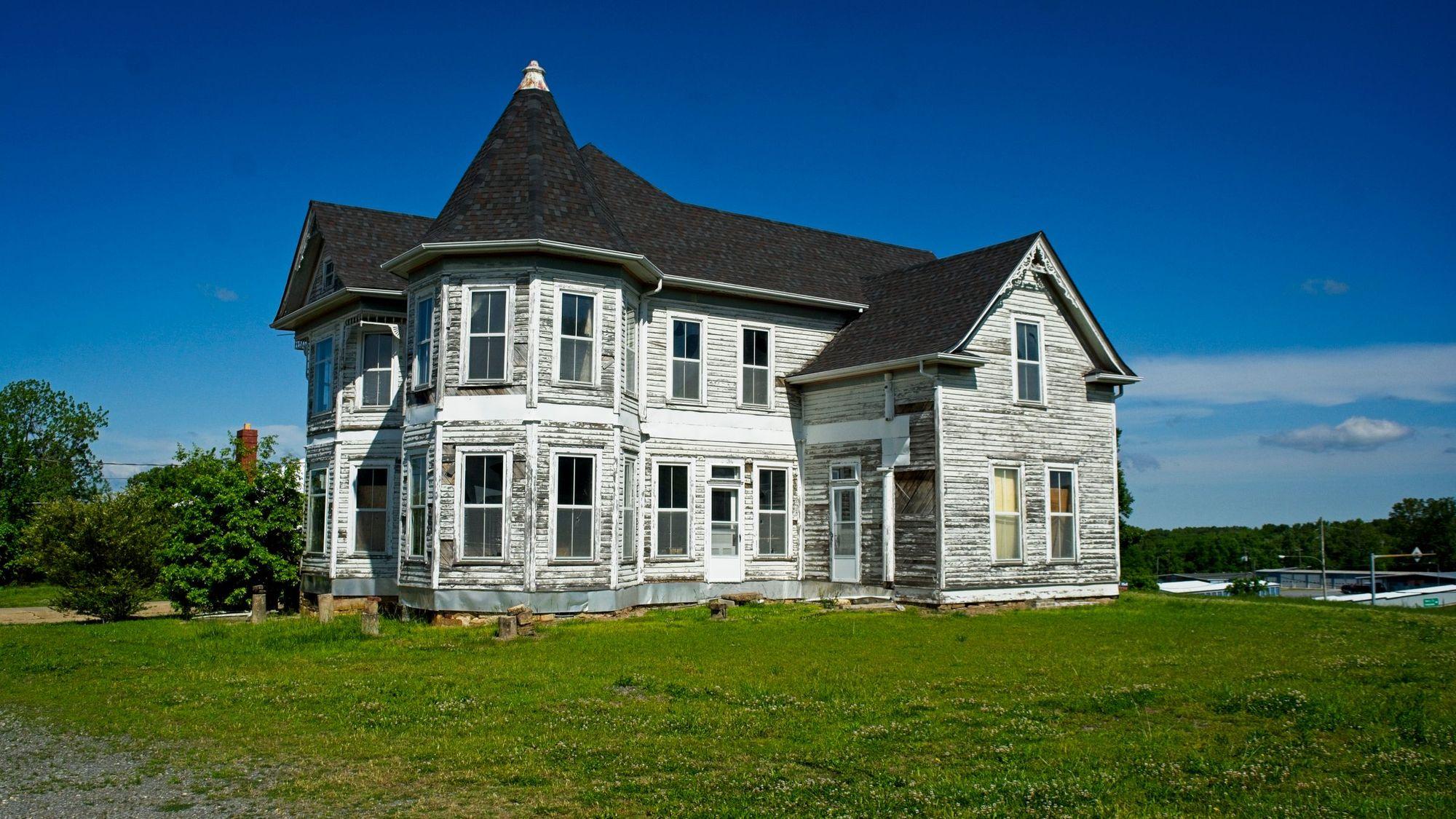
A code violation case is one of the few public records that describes a house's condition before you see it. The city has been out to the property, written down what is wrong, given the owner a deadline and, in many cases, started charging fines. If you buy, wholesale or list houses, code violation properties give you owners with a problem that has a clock on it and a paper trail you can read.
This guide covers how code enforcement works, where the records live, how to read a case and what to check before you buy. Rules vary by state and city; confirm with a local real estate attorney before you rely on any deadline or lien rule.
What counts as a code violation property
A code violation property is any parcel with an open case under a local code. That code might be a property maintenance code, a housing code for rentals, a building code, a zoning ordinance or a nuisance ordinance. Common violations include:
- Tall grass, trash, junk vehicles and roof, window or porch damage
- No heat, no hot water or unsafe wiring in a rented unit
- Work done without a permit, or a permit that was opened and never finaled
- Illegal units, such as a basement or garage converted without approval
- Open vacant buildings, or structures declared unsafe to occupy (condemned or placarded)
A tall-grass notice and an unsafe-structure order are both "code violations," but they describe very different owners and deals.
How municipal code enforcement works
Details change by city, but the shape of a case is nearly the same. Panama City, Florida publishes a typical sequence on its Code Compliance page, and Florida's state framework in Chapter 162 of the Florida Statutes sets out the notice, hearing, fine and lien steps in law.
- Complaint or inspector sweep. A neighbor or tenant reports a problem, or an inspector spots it. Panama City notes that most of its cases are inspector initiated, not complaint driven.
- Inspection. An inspector confirms the condition, takes photos and cites the code section.
- Notice of violation. The owner gets a written notice describing the problem, what has to be done and by when.
- Compliance deadline. The owner gets a set time to fix it. Under Fla. Stat. 162.06, the inspector must give a "reasonable time to correct," except for repeat violations or serious threats to health and safety.
- Reinspection. If the work is done, the case closes. If not, it moves forward.
- Hearing. An enforcement board, special magistrate, administrative hearing officer or municipal court hears the case and issues an order with a new deadline.
- Fines. If the owner still does not comply, daily fines start or a fixed penalty is imposed.
- Lien. The order imposing fines, or the bill for the city's own repair work, is recorded or added to the tax bill and becomes a lien on the property.
- Abatement. The city sends its own contractor to mow, board up or repair, then bills the owner.
- Demolition. For buildings found unsafe, the city can order the structure repaired or torn down and, if the owner does nothing, demolish it and charge the cost to the parcel.
Notice rules are strict because a lien follows. Florida's Section 162.12 allows certified mail to the address on the tax collector's records or hand delivery, backed up by publication or posting at the property and at the government office. Notice can be legally sufficient even if the owner never read it, so many heirs and out-of-state landlords learn about a case only when a lien shows up.
Fines, liens and demolition: what an open case costs the owner
Daily fines. In Florida, Section 162.09 caps fines at $250 per day for a first violation and $500 per day for a repeat violation, with up to $5,000 for a violation that cannot be undone. Local governments with 50,000 or more residents can adopt higher caps, up to $1,000 per day for a first violation. Fines keep accruing until the owner complies.
Liens. In Florida, a recorded order imposing a fine becomes a lien on the land where the violation exists and on other real and personal property the violator owns. After the lien has been unpaid for three months, the board can authorize the city attorney to foreclose or sue for a money judgment, but a code lien cannot be foreclosed on a homestead. Under Section 162.10, the lien lasts up to 20 years from recording unless an enforcement action is started.
City repair bills. In New York City, when owners ignore serious housing violations, HPD can send its own contractors through the Emergency Repair Program. The charges are billed through the Department of Finance on the property tax statement, and unpaid charges become a tax lien that can be sold or foreclosed. For the full picture on how these charges stack up, see our guide to municipal liens.
Demolition. Texas gives a clear example of the end of the line. Under Texas Local Government Code 214.001, a city can order a dilapidated or unsecured building vacated, secured, repaired, removed or demolished after notice and a public hearing. The owner, lienholder or mortgagee must generally secure, repair, remove or demolish the building within 30 days unless they show the work cannot reasonably be done in that time, and the city cannot allow more than 90 days unless they bring a detailed plan and show the job is too complex to finish sooner. If nobody acts, the city can vacate, secure, remove or demolish the building at its own expense (the statute does not let it make repairs) and record a lien for the cost, unless the property is a protected homestead. If every mortgagee and lienholder got notice, that lien ranks behind only tax liens.
Where code violation records live
There is no national database of code cases. Each city or county keeps its own, often in more than one place.
City code enforcement portals
Many cities run a public case lookup on their permit software. Search the city name plus "code enforcement case search" or "permit and inspection portal." You can usually search by address or parcel number and see open and closed cases, inspection dates and the cited code sections. Some also search by case type or date range, which is how you build a list.
Open data portals
Larger cities publish violations as downloadable datasets. Two examples:
- New York City publishes Housing Maintenance Code Violations from HPD, one row per violation, updated regularly.
- Chicago publishes Building Violations from the Department of Buildings, going back to 2006.
Read the fine print. Chicago's description warns that the data is historical and should not be relied on for closings, and tells lenders and title companies to check the title commitment and the case records at the Circuit Court of Cook County or the Department of Administrative Hearings. Open data is a good place to find owners. It is not a lien search.
Public records requests
If a city does not post its cases online, ask for them. Every state has an open records law. Florida's is typical: under Section 119.07(1)(a), "Every person who has custody of a public record shall permit the record to be inspected and copied by any person." Send a short written request to the code enforcement department or the city clerk asking for open cases by date range, with address, parcel number, violation type, status and next hearing date. Ask for a spreadsheet, and ask whether they will send it monthly.
Hearing agendas, recorded liens and court dockets
Enforcement boards and special magistrates post hearing agendas, often as PDFs. These list cases that already failed reinspection: owners who did not fix the problem. Recorded fine orders and code liens show up in the county recorder's index, and cases sent to municipal or housing court show up on the docket.
Driving and vacancy records
You can also find these houses by driving: overgrown yards, boarded windows, notices on the door. Many cities run vacant building registries, which often overlap with code cases. Our guide to vacant property registration covers how those work.
How to read a code enforcement case
The fields differ by city, but the same questions apply. Here is what to look at, using field names from the New York and Chicago datasets as examples.
| What you want to know | Where it shows up | Why it matters |
|---|---|---|
| How serious is it | NYC "Class" (A, B, C); Chicago "Violation Description" and "Violation Ordinance" | Separates a cosmetic issue from a safety order |
| Is it still open | NYC "ViolationStatus" and "CurrentStatus"; Chicago "Violation Status" | Closed cases are history, open ones are pressure |
| When was it due | NYC "OriginalCorrectByDate" and "NewCorrectByDate" | A pushed-back date can mean an extension or a stalled owner |
| Did the owner claim a fix | NYC "CertifiedDate" | Certified but still open often means a failed reinspection |
| What the inspector saw | Chicago "Violation Inspector Comments" | The plain-language note is often more useful than the code section |
| Which parcel | NYC "BBL"; most cities a parcel or PIN number | Lets you match the case to the owner of record |
New York's HPD sets deadlines by class. Its Clear Violations page gives owners 90 days to correct a Class A (non-hazardous) violation, 30 days for Class B (hazardous), and 24 hours for most Class C (immediately hazardous) conditions, with no time at all for heat and hot water. A building with a stack of open Class C violations is a very different owner than one with a single old Class A.
Three practical notes:
- Violation records rarely include the owner's name. You join them to the assessor or tax roll by parcel number to get the owner of record and mailing address.
- Count the cases, not just the violations. One inspection can produce ten rows. Group by address and count separate inspections.
- Look at the timeline. A case that has been through two reinspections and a hearing tells you the owner cannot, or will not, fix it.
What a violation signals and what it does not
A code case is evidence of a problem with the property. It is not proof the owner wants to sell.
Owners who often do want out:
- Heirs holding a house they did not choose and cannot afford to repair, especially when a probate filing sits on the same parcel
- Out-of-state landlords who keep getting notices about a rental they no longer want to manage
- Owners who started a renovation, ran out of money and now have an expired permit and a stop-work order
- Owners of vacant houses facing an unsafe-structure order and a demolition hearing
Owners who usually do not:
- An occupied, well-kept house with a single tall-grass or trash-can notice
- A large landlord that fixes routine rental violations on schedule
- A homeowner in a permitted project who is behind on an inspection
The strongest signal is a code case combined with something else. Code violations plus unpaid taxes, an absentee mailing address, a recent death in the family or a pending foreclosure tell you the owner has more than one reason to sell. See how to find motivated sellers for how to stack these records, and tax delinquent properties for the most common overlap.
How to approach an owner with open violations
Assume the owner is tired of hearing from the city. Be useful and specific.
- Open with the house, not the violation. Say you buy houses in their area and the property may need work. Do not quote their case number back to them.
- Never imply you work for the city. No official-looking envelopes or "notice" language.
- Ask what they know. Many owners, especially heirs and remote landlords, do not know a hearing is scheduled or that fines are running.
- Ask the questions that set your price. What needs work, whether anyone lives there, what they would want for it, and how soon they want it done.
- Offer a way out of the case. An as-is sale where the buyer handles the repairs and deals with the city is often the most appealing thing you can say.
Follow up. An owner who says "not now" may call back the week a demolition hearing notice arrives.
Due diligence before you buy
- Get the complete case file. Every notice, inspection report, photo and order. Look for any order to vacate or demolish.
- Order a municipal lien search, not just a title search. Code liens, abatement charges and utility balances do not always show up in a standard title commitment, and some can sit only in city billing systems.
- Check open and expired permits. An open permit from a past owner can block your new permit until it is closed or voided.
- Look for unpermitted work. A finished basement, an added bathroom or a converted garage with no permit may need to be legalized or removed.
- Understand who becomes responsible. In Florida, Section 162.06(5) requires an owner who sells during a pending case to disclose the case in writing, hand over the pleadings and notices, and tell the buyer they will be responsible for compliance. The case is not dismissed because the house changed hands, but the new owner gets a reasonable time to correct before the hearing.
- Ask about fine reduction. Some jurisdictions will reduce accrued fines once the property comes into compliance. Florida's statute says plainly that "an enforcement board may reduce a fine imposed pursuant to this section," and directs the board to weigh actions taken to correct the violation. Ask the city what its process is before you set your price.
Rehab and permit planning for the buyer
Meet with the code officer early with a scope of work and a realistic schedule. Many cities will give a new owner who is actively fixing the property a compliance plan or extension. The Texas dangerous building statute shows how these schedules work in practice: more than 30 days requires specific time schedules and securing the building, and more than 90 days requires a detailed plan and regular progress reports.
Pull permits before you start, because unpermitted work to cure a violation can create a new one. Budget for the inspection sequence too: a failed final keeps the case open.
Think about your exit buyer. If you plan to resell to an owner-occupant, their lender will look hard at condition. An FHA 203(k) rehabilitation loan lets a homebuyer roll repair costs into the mortgage, which can widen your buyer pool for a house you sell before the work is done. If you are wholesaling, your end buyer will price every open item, so hand them the case file with the contract. See our wholesaler page for more on working these sellers.
How fines and liens change the purchase math
Treat every dollar the city is owed as part of the price.
A hypothetical example. A vacant house would be worth $220,000 fixed up. Repairs, including the items the city cited, run $55,000. The case has a recorded fine lien of $18,000 and an abatement bill of $2,500 on the tax statement. If your normal formula would put your price at $100,000 on a clean house, the liens are not a bonus discount. Someone has to pay $20,500 at closing, and that comes out of the owner's proceeds or your margin.
Three ways buyers handle it:
- Seller pays at closing. The closing agent pays the liens from the seller's proceeds, like a mortgage payoff.
- Negotiate with the city first. Get a written reduction or compliance agreement, and make your contract contingent on it.
- Buyer assumes and cures. You take the house subject to the case, fix it, then ask for a reduction. This is the riskiest path, because a reduction is never guaranteed.
Whatever you choose, get the city's payoff figure in writing and close with a title company or attorney who has handled code liens in that jurisdiction. Rules vary by state; confirm with a local real estate attorney.
Where Skipset fits
Working these cases by hand means pulling lists city by city, matching parcels to owners and following up for weeks. Skipset does that work. It finds owners showing distress in public records, including code violations, nuisance cases and municipal liens, along with probate, pre-foreclosure, tax liens, evictions and judgments.
Skipset then reaches the owner by call, text and email, qualifies them on asking number, condition, timeline and motivation, and books a call or in-person appointment on your calendar. You negotiate and close. Owners are exclusive to your county. See pricing for how it works for wholesalers, funds, agents and brokers.
This guide is general information, not legal, tax or financial advice. Rules vary by state and county; confirm with a local real estate attorney before you act.
Questions
- Can you buy a house with open code violations?
- Yes. An open case is usually a problem to price and solve, not a legal bar to the sale, and many investors buy these houses on purpose. The buyer usually takes on the duty to fix the conditions, and any recorded fine or abatement lien has to be paid or negotiated at closing. Get the full case file and a lien search before you sign.
- Do code violations transfer to the new owner?
- The physical conditions stay with the house, so the new owner is the one the city will expect to fix them. Recorded liens for fines or city repair costs generally stay attached to the land until paid. Some states also make the seller disclose a pending case: Florida, for example, requires the seller to disclose a pending case in writing and to tell the buyer they will be responsible for compliance.
- Are code enforcement records public?
- In most places, yes. Code cases are government records, and many cities post them on a case lookup portal or an open data site. When they are not online, you can usually get them through a public records request under your state's open records law.
- Can a city foreclose on a code enforcement lien?
- Sometimes. In Florida, a local government can foreclose a code enforcement lien that stays unpaid for three months, but not on a homestead. Some cities, such as New York, bill city repair charges on the property tax statement, where unpaid amounts become a tax lien that can be sold or foreclosed. The rules depend on the state and the city, so check them locally.
- Can the city demolish a house for code violations?
- Yes, if the building is found unsafe and the owner does not repair or remove it after notice and a hearing. Texas law, for example, lets a city order a substandard building repaired, secured or demolished, then secure, remove or demolish it itself if the owner does not. The city's cost then becomes a lien on the land unless it is a protected homestead.
Keep reading
Distressed property · 8 min read
Vacant Property Registration: Find Empty Houses in City Records
How vacant property registration works, who must register, where cities publish the lists, and how to pair them with tax and code records to reach owners.
Taxes and liens · 13 min read
Tax Delinquent Properties: How to Find Owners Behind on Property Taxes
How tax delinquent properties work, where county delinquency lists come from, how to read them, and how to reach owners before the tax sale.
Playbooks · 12 min read
How to Find Motivated Sellers: The Public Records That Signal a Sale
How to find motivated sellers in court, recorder, tax and code records, stack signals on one property, reach owners legally and book the appointment.
Book a demo
Name, email, phone, your company, what you are, your state, and how many appointments you want each month.