Off-Market Multifamily: How to Source Apartment Owners Directly
Off-market multifamily sourcing: the public records that flag a tired apartment owner, how to reach the person behind the LLC, and what to ask first.
The Skipset team · · 9 min read
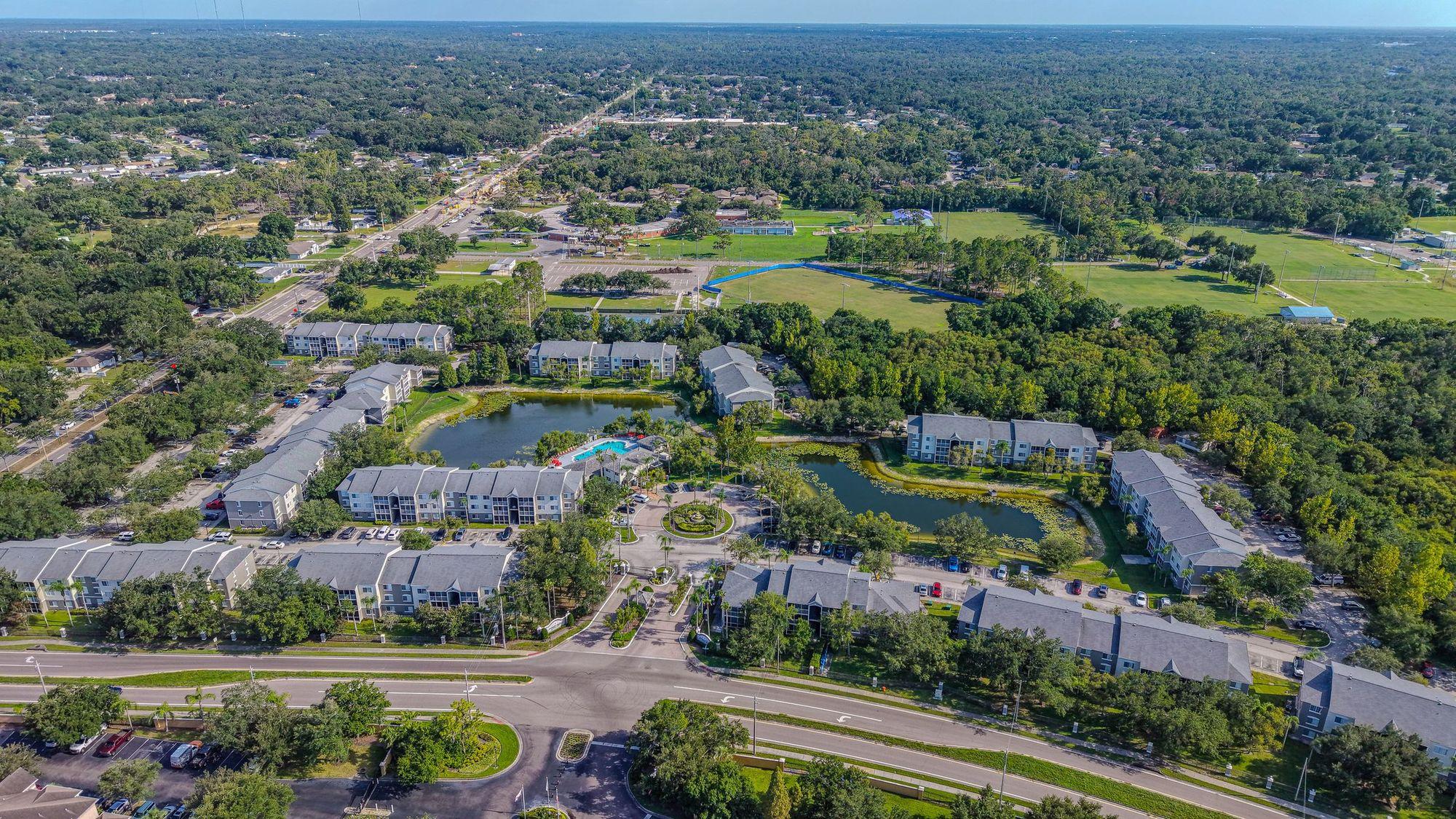
In any given year, most apartment buildings are not for sale. The owner bought years ago, the tenants pay most months, and nobody has asked about selling. Off-market multifamily is about finding the owners in that group who have a reason to sell now, reaching the person who can actually sign, and qualifying the building before you spend a week on underwriting.
The pages that rank for this topic mostly list the same tactics: call brokers, drive neighborhoods, buy a data subscription, network. Those work. What they skip is the part that makes direct sourcing repeatable for a fund or a multifamily operator: reading public records for distress, getting past the LLC to a decision maker, and running a first conversation that tells you whether the building fits your buy box.
Why funds and operators source direct
Listed deals are priced to the market by a broker whose job is to run a competitive process. That is fine when you want volume and speed. Direct sourcing gives you something different:
- Fewer bidders. If you are the only buyer talking to the owner, you set the pace and the terms.
- A motivated counterparty. An owner facing a code case, a tax bill or an estate to settle cares about certainty and timing, not only price.
- Room to structure. Seller financing, a longer close, an assumption of existing debt or a partial interest are easier to raise one-on-one.
- Better information. You can ask the owner directly about deferred maintenance and tenant problems instead of reading a polished offering memo.
The cost is your time. Direct outreach is slow, and the owners with the most reason to sell are often the hardest to reach.
Build the owner universe first
Start with the county assessor or property appraiser. Most counties classify parcels with a land-use or property-class code, and there is usually a code (or a few) for apartments with five or more units, separate from duplexes, triplexes and fourplexes. Pull every parcel in your target submarkets that matches your unit range.
From that file you get the parcel number, the situs address, the owner name, the owner's mailing address, assessed value and often the year built. That is your universe. It is not yet a list of sellers. It is the set of buildings you will match against distress signals.
Two cleanups pay off right away:
- Group by owner name and mailing address. One LLC or one family often owns several buildings. Owners with a portfolio behave differently from a single-building owner.
- Flag absentee owners. A mailing address out of state or across the country matters more on a 20-unit building than on a single-family rental, because the owner is managing staff and contractors from a distance.
The public records that flag a motivated apartment owner
Distress on a multifamily building shows up in the same courthouse, recorder and city records as it does on houses. The difference is scale: bigger tickets, more tenants, more agencies paying attention.
| Signal | Where to find it | What it usually means on multifamily |
|---|---|---|
| Code violations | City code enforcement or building department case search | Deferred capex, failed inspections, a rental license at risk |
| Eviction filings | County civil or landlord-tenant court docket | Collections trouble or a management problem; compare against unit count |
| Tax delinquency | County treasurer or tax collector | Cash flow strain; on a mortgaged building, it can mean the escrow is gone |
| Liens and judgments | County recorder and civil court | Unpaid contractors, utilities or vendors; creditors closing in |
| Municipal liens | City utility billing and recorder | Unpaid water, sewer, demolition or board-up charges attached to the parcel |
| Pre-foreclosure and foreclosure | Recorder (lis pendens, notice of default) and court docket | The lender is acting; the timeline is set by the case or the sale date |
| Probate of an owner | County probate court | A death in the ownership; heirs or an estate deciding what to keep |
A few notes from working these records on apartments:
Normalize evictions by size. A 300-unit complex files evictions every month as routine collections. A 12-unit building with six filings in a quarter is a different story. Count filings against units and look for a change from the owner's own history. The eviction records guide covers how to search the docket.
Read the code case, not just the count. One open case for tall grass is noise. Repeat cases for heat, hot water, fire safety or structural items mean real capital needs and an owner who is being pushed by the city. More on reading those files in code violation properties.
Tax delinquency on a financed building stands out. Many commercial lenders escrow taxes or require proof of payment. When a building with a recorded mortgage goes delinquent, the owner has often stopped paying more than the county.
Stack signals. A single record rarely means much. An absentee owner with an open code case, rising eviction filings and a tax bill past due is a building worth a call this week.
Getting past the LLC to the decision maker
Most apartment buildings are owned by an LLC or another entity, so the owner name on the tax roll tells you almost nothing about who to call. Here is the order that works.
Start with the state business filing
Search the LLC name with the secretary of state (or the state's corporations division) where it was formed and where it is registered to do business. What you get varies a lot by state:
- Some states show very little for free. Delaware's entity search returns the entity name, file number, formation date and registered agent, with more information available for a fee. Delaware also prohibits data mining of that site, so search by hand.
- Other states require more in the annual report. In Florida, an LLC's annual report must include the name, title and address of at least one person with authority to manage the company (Fla. Stat. 605.0212).
The registered agent is usually a service company or an attorney. It accepts legal papers. It is not the owner, and calling it rarely gets you anywhere.
Don't count on federal beneficial ownership filings either. U.S. companies no longer have to file beneficial ownership reports with FinCEN.
Then check the recorded documents
The deed that put the building into the LLC, and any mortgage the LLC signed, are recorded with the county. Look at the signature block. A person signed as managing member, manager or authorized signatory. That name, plus the LLC's principal office address, is often your best path to a real person.
Then find a working phone and email
Skip trace the individual, not the entity. Check whether the same person signs for other LLCs in your universe. Often one manager controls several buildings, and one conversation covers a portfolio.
Know who can actually decide
On multifamily, the person you reach may not be the person who signs. A syndication has a general partner and investors with approval rights. A family partnership may need every sibling. Ask early: "Besides you, who would need to agree to a sale?"
When the signal is probate, look at how the building is held. If the person who died owned the building in their own name, it goes through the estate and the executor or administrator is your contact (the probate real estate guide covers that process). If they owned it through an LLC, the building itself stays in the company. What passes is the member's interest, and the estate's power depends on state law and the operating agreement. Under the uniform LLC act as Iowa adopted it, a deceased member's legal representative gets a transferee's rights and, to settle the estate, the member's information rights (Iowa Code 489.504). Florida goes further and lets the representative exercise all of the member's rights for settling the estate (Fla. Stat. 605.0504). In practice, find out who the surviving managers are and what the heirs want. Rules vary by state; confirm with a local real estate attorney.
Qualifying the building on the first call
You are not underwriting on the first call. You are deciding whether the building deserves underwriting. Keep it to the questions that change the answer.
| Ask | Why it matters | What to request next |
|---|---|---|
| How many units are occupied, and how many are paying? | Occupancy and collections drive value more than asking rent | Current rent roll |
| What does the building net in a normal year, or what number do you have in mind? | Tells you if price and income are in the same range | T-12 operating statement |
| What are the lease terms? Any regulated, subsidized or month-to-month units? | Lease mix and rent rules cap your upside | Copies of leases, any housing assistance contracts |
| What big repairs are coming? Roof, boilers, plumbing, electrical, parking? | Capex is where direct deals go wrong | Recent inspection reports, open code cases, bids |
| What is the debt, and can it be assumed or prepaid? | Prepayment penalties and assumption rules shape the structure | Loan documents or a payoff estimate |
| When do you want to be done? | Timing shows motivation and sets your diligence window | A target closing date |
Two follow-ups are worth asking when they fit:
- Is this part of a 1031 exchange? A seller trading into another property has hard dates. Under federal law, replacement property has to be identified within 45 days and received within 180 days of the sale, or by the tax return due date if that comes first (26 U.S.C. 1031(a)(3)). That can make a seller flexible on price and rigid on closing.
- Who manages the building day to day? A self-managing owner tired of tenant calls is a different seller.
Whatever the owner says, underwriting stays with you. Verify the rent roll against leases and bank deposits, rebuild the T-12 with your own expense assumptions, and walk the units yourself. An owner's number is a starting point, not a fact.
Reaching apartment owners without burning the list
Owners of apartment buildings get a steady stream of "would you sell?" letters. Make yours specific and short: name the building, say you buy directly, and say you can work around their timeline or debt. Then expect to follow up several times across phone, text, email and mail.
Respect the rules while you do it. The federal Telephone Consumer Protection Act bars autodialed or prerecorded calls to cell phones without prior express consent (47 U.S.C. 227(b)(1)(A)(iii)), and an owner's cell phone is still a cell phone when the building sits in an LLC. States add their own rules for calls and texts. Have your outreach process reviewed by compliance counsel.
Where Skipset fits for funds and multifamily buyers
Running this whole process in-house means a records desk, a skip tracing budget, callers and a lot of follow-up. Skipset runs the front of it. It finds owners showing distress in public records, including code violations, evictions, tax liens, liens and judgments, municipal liens, pre-foreclosure, foreclosure and probate. It reaches them by call, text and email, qualifies commercial and multifamily owners on occupancy or rent roll, NOI or asking, leases, capex and timeline, and books a call or in-person appointment on your calendar. You run the underwriting, negotiate and close. Each owner is exclusive to your county, so another buyer there does not get the same seller.
For funds, Skipset works on a partnership and is paid when the deal closes. See how it works for funds and for multifamily properties, and the details on pricing.
This guide is general information, not legal, tax or financial advice. Rules vary by state and county; confirm with a local real estate attorney before you act.
Questions
- Are off-market multifamily deals cheaper than listed ones?
- Not automatically. An owner who skips the broker often still wants market value, and some ask for more because they have not tested the market. The edge is usually in terms and certainty: less competition, more time for diligence and room to structure around the seller's timeline or debt.
- Do I need a commercial broker to buy an off-market apartment building?
- No. You can buy directly from the owner with a purchase agreement drafted or reviewed by your attorney. Many buyers still work with brokers for listed inventory and pocket listings, and direct sourcing runs alongside that. If a broker represents the seller, expect to discuss who pays the commission.
- What is a T-12 in multifamily?
- A T-12, or trailing twelve, is the property's income and expense statement for the most recent twelve months, usually shown month by month. Buyers use it with the rent roll to see actual collections, vacancy and operating costs. Ask for the bank statements or tax returns that back it up before you rely on it.
- Can I take over the seller's existing mortgage on an apartment building?
- Sometimes. Some commercial and agency loans allow assumption with the lender's approval, fees and a new borrower review, while others must be paid off and may carry a prepayment penalty. Ask the seller for the loan documents early, because the answer changes both your price and your timeline.
Keep reading
Playbooks · 9 min read
How to Find Off-Market Deals: A 2026 Playbook for Wholesalers
How to find off-market deals as a wholesaler: pick a county, stack public records, follow up across channels, qualify sellers and book real appointments.

Playbooks · 8 min read
BatchLeads Alternatives: When You Want Conversations, Not Lists
Weighing a BatchLeads alternative? See what BatchLeads does well, the work left after a list, and how data tools, CRMs, dialers and booking services compare.
Playbooks · 8 min read
DealMachine Alternatives: Beyond Driving for Dollars
Looking for a DealMachine alternative? Compare driving-for-dollars apps, data platforms, investor CRMs and booked seller appointments, then pick one.
Book a demo
Name, email, phone, your company, what you are, your state, and how many appointments you want each month.